What Is a Patina Finish? Patina and Distressing on Wood Furniture
What do patina, distressing, shading, wire brushing, rub-through and worm tracks mean? A short glossary of furniture finishes, with color examples and care tips.
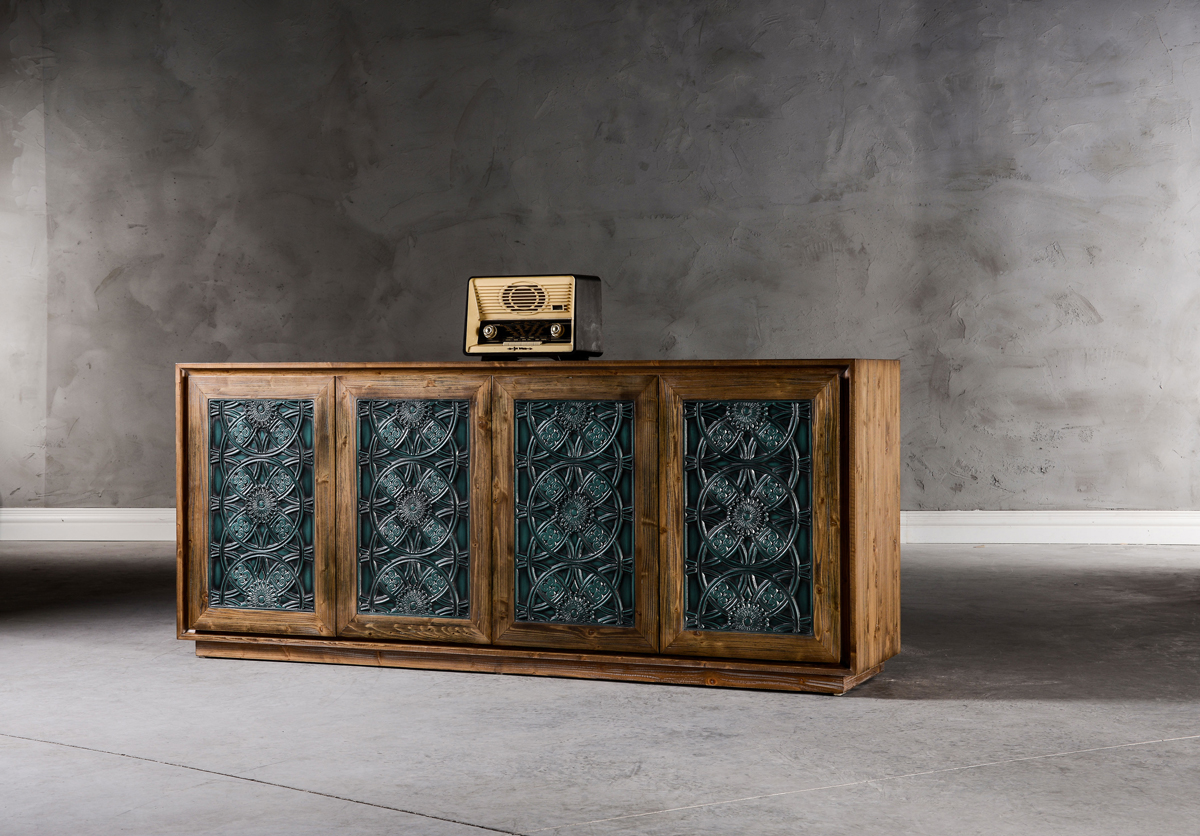
What is a patina finish? On wood furniture, patina is a finish of thin paint and varnish coats, partly wiped off or worn back so the tones beneath show through in places. It looks deeper than flat paint, as if the piece had seen years of use. Metal patina is the layer copper or bronze forms as it oxidizes in air and moisture: same name, different origin.
What is a patina finish, and what does patina mean?
The word patina describes the mark that time leaves on a surface; a patina finish is the technique of creating that mark on purpose on a new piece of furniture. On a table used for years, the edges grow glossy from handling and the wood's tone changes with the light; this natural aging gives a warm, layered look.
In the workshop, the same look is achieved with paint and varnish. Unlike a single flat coat of paint, several tones are layered: a base color, a darker middle coat and a protective varnish. Products sold as "patina paint" in hardware and craft stores are also usually paints or colorants made for this kind of distressing work; this article is about the technique, not the product.
Metal patina, by contrast, forms on its own over time or is applied with a chemical treatment during manufacturing; on furniture you see it most on pulls, as with the oxidized copper pulls on the Lükens Entryway Console.
How is a patina finish applied? The general steps in the workshop
In the workshop, the patina technique is usually applied in five stages: surface preparation, base color, middle coats, wiping and distressing, and a protective topcoat.
- Surface preparation: The wood is sanded, dusted off and primed if needed; how well the paint holds depends on this stage. Texturing work such as wire brushing, worm tracks and wormholes is also most often done before painting, on the bare wood, so that color later collects in the hollows.
- Base color: The piece gets its main tone. This can be an opaque paint such as cream or blue, or a walnut-toned colorant that lets the grain show through.
- Middle coats: A semi-transparent coat darker than the base is applied. It collects in carvings, corners and the recesses of moldings, creating shadow.
- Wiping and distressing: The middle coat is wiped off the raised surfaces with a cloth, or the edges are lightly worn back once it has dried. In most workshops, shading and two-tone rub-through are also done between coats of paint, before the topcoat.
- Protective topcoat: Varnish or a clear finish goes on last. This coat, which can be matte, satin or glossy, protects the furniture from everyday use.
This isn't a DIY recipe but a summary to help you understand the surface you're looking at; in applying a patina finish, the number of coats, drying time, choice of paint and order of steps vary with the workshop and the look being sought.
A glossary of finishing techniques: distressing, shading, wire brushing, rub-through, worm tracks and lacquer
Each furniture finishing term describes a different job: patina and distressing describe the overall look, shading the color transition, wire brushing and worm tracks the texture, two-tone rub-through one color showing from beneath another, and lacquer a flat paint that covers the grain.
| Term | What it does | Example at İmhotep |
|---|---|---|
| Patina | Gives depth and an aged look through layered paint and varnish | Şato Console |
| Distressing | Gives a new piece an old look through worn edges and variations in tone | Venedik Bed Frame |
| Shading | Creates shadow and color transitions with a fine, semi-transparent tone | Arizona Coffee Table (body and legs) |
| Wire brushing | Brings out the texture of the grain with a wire brush | Elvin TV Stand (top), Prada Wardrobe |
| Two-tone rub-through | Layers two colors and lets the second one show here and there on edges and in recesses | Lükens Entryway Console, Elegance Armchair (legs) |
| Worm tracks and wormholes | Reinforce the distressed look with decorative holes and grooves | Arizona Coffee Table, Academy Bookcase |
| Lacquer | Creates a flat, single-color painted surface that covers the grain | Bodrum Console (CNC-cut details on the doors) |
Patina
Patina is a paint-and-varnish method that gives a surface depth and an aged look by applying darker middle coats over the base color and wiping them back. On the Şato Console, the doors have a blue patina and the CNC patterns are accented with shading; the rest of the console has a walnut-toned patina.
Distressing
Distressing is the general name for the steps that give a new piece of furniture a used look: thinning the paint on edges and corners, darkening the tone and creating small signs of wear. The phrase "distressed patina" means the two are applied together. On the Venedik Bed Frame, the headboard and footboard have a dark walnut patina, and the other surfaces are finished with distressing. On wood furniture, distressing describes the look, not the material.
Shading
Shading is the creation of shadow and color transitions by spraying a very fine, semi-transparent tone onto a painted surface, usually with a spray gun. It's mostly concentrated on edges, around carvings and on moldings, and it breaks up the brand-new look of flat paint. On the Arizona Coffee Table, shading adds depth to the cream distressed patina on the body and legs.
Wire brushing
Wire brushing means scrubbing the wood with a wire brush to remove some of the softer wood between the growth rings, so the grain can be felt by hand. Because color can settle more in the hollows of brushed wood, the grain stands out. Two examples with wire brushing: the Elvin TV Stand (top) and the Prada Wardrobe.
Two-tone rub-through
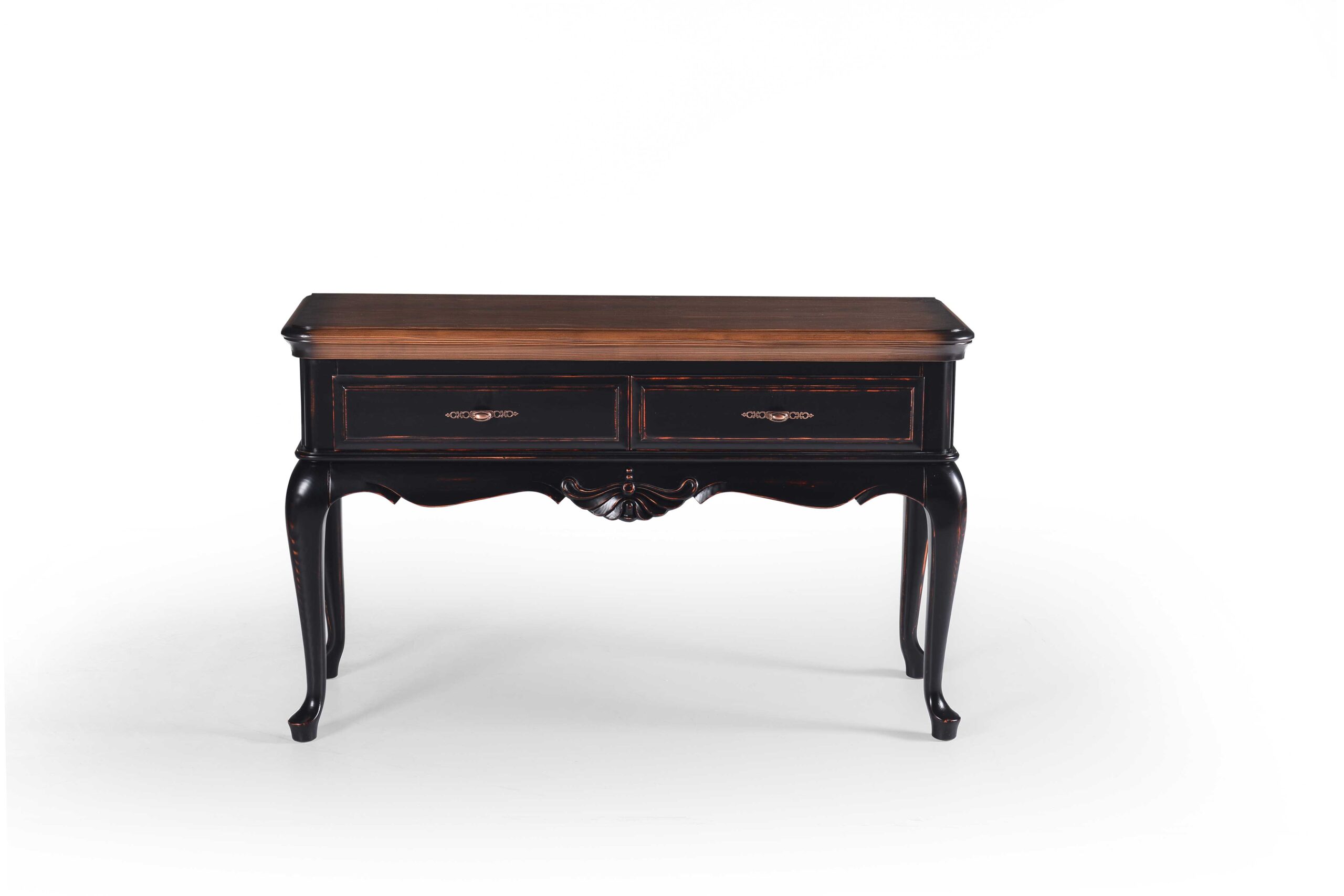
Two-tone rub-through is a painting technique in which two different colors are layered and the second color shows here and there on edges, corners or the recesses of carvings; the order in which the colors are applied can vary by workshop and model. The Lükens Entryway Console is painted black using a copper rub-through method, and its paint is brought to life with shading. On the legs of the Elegance Armchair, a yellow rub-through method was used, with black silk-matte paint applied on top. In the Lükens series, the descriptions of the console, dining table and display cabinet also mention copper rub-through together with shading.
Worm tracks and wormholes
Worm tracks and wormholes are decorative distressing details that imitate the marks left by wood-boring insects: wormholes are the small holes, and worm tracks the thin, winding grooves. They aren't real insect damage; they are worked into the new piece deliberately. On the Arizona Coffee Table, these details bring out the texture of the wood, while on the Academy Bookcase they reinforce the distressed look. If flour-like dust is collecting under or around the holes in a piece of furniture, the damage may be real and active; consult a specialist.
Lacquer
Lacquer is a smooth, flat, single-color painted finish that completely hides the wood grain. Unlike patina, it shows no visible layers of tone and no wiping or wear marks; it gives a simpler, more modern look. The CNC-cut details on the doors of the Bodrum Console are finished with lacquer paint.
Patina colors: cream distressed, walnut, blue and tobacco
Patina isn't a single color; there are light-based, wood-toned and colored versions, and several tones can be combined on the same piece. Examples from İmhotep pieces:
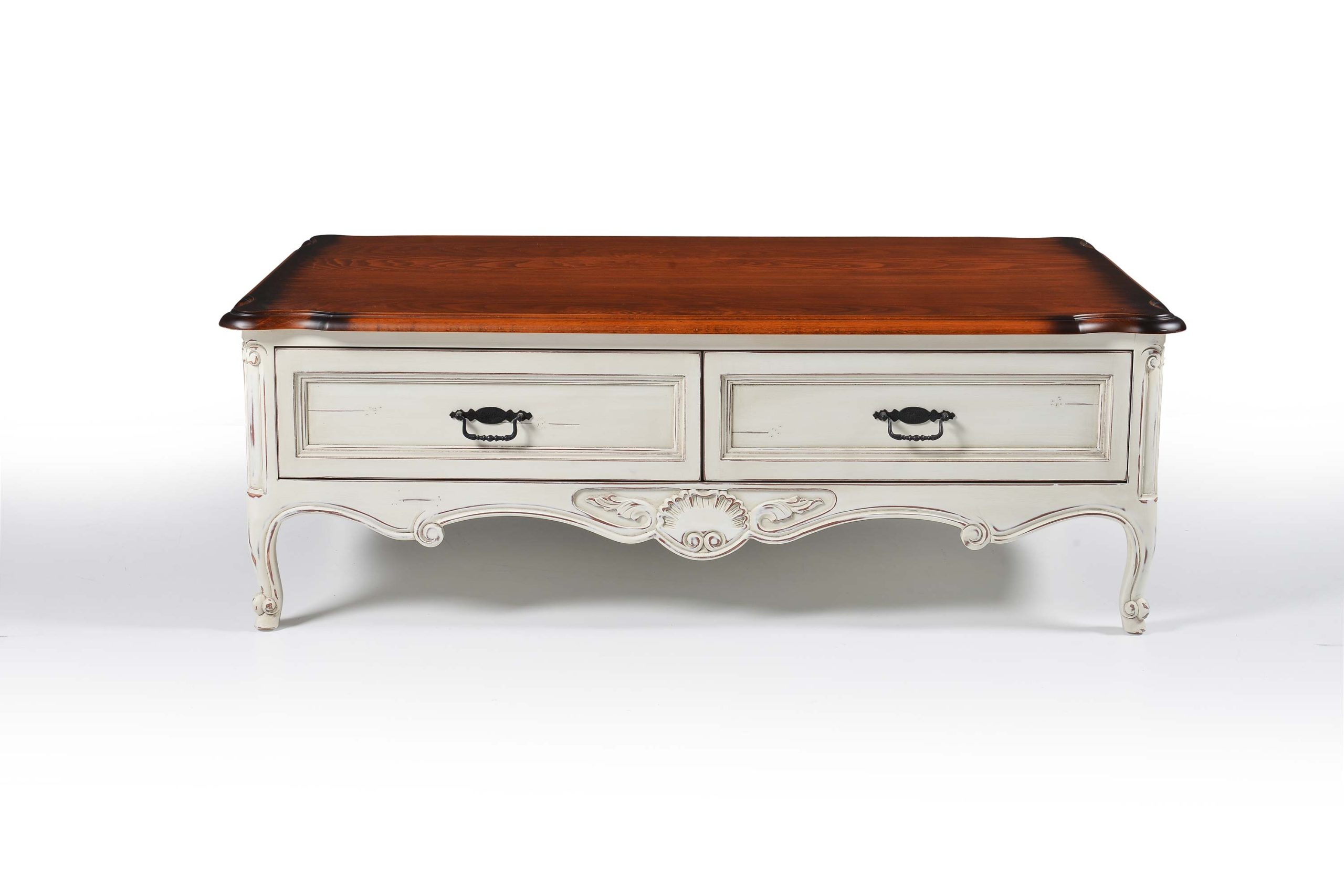
- Cream distressed: A light base with a tone that deepens on the edges and in the recesses of carvings. The body and legs of the Arizona Coffee Table.
- Walnut and dark walnut: Warm brown tones that let the grain show. The Elvin TV Stand is walnut-toned; the top of the Arizona Coffee Table is dark walnut.
- Tobacco: The top of the Arizona Dining Table is finished in this tone, with distressed patina and varnish adding depth.
- Blue: An example of colored patina. The doors of the Şato Console.
- Dark green: The body and legs of the Academy Bookcase; the crown and middle shelf are dark walnut.
- Black and copper: A surface painted black with copper rub-through, its paint brought to life with shading. The Lükens Entryway Console.
In this list, "walnut" is a color tone, not a wood species: the Elvin TV Stand is made of spruce and colored a walnut tone using the patina method. Wood species and solid wood construction are explained in detail in the article on what solid wood furniture is.

What is water-based paint, and does it affect the patina?
Water-based paint is paint that uses mostly water as its carrier; compared with solvent-based paints thinned with paint thinner, it contains fewer volatile organic compounds (VOCs) and usually gives off less odor during application. The patina technique can be applied with either type of paint; the look depends less on the type of paint than on the order of the coats and how skillfully they're wiped.
At İmhotep, we use water-based paints chosen with human health in mind. In our product descriptions, this is stated on the Şato Armchair and the Venedik Bed Frame, for example; the descriptions of the Şato sofa models also mention a water-based finish.
Caring for patina and distressed furniture
Patina and distressed surfaces are cleaned with a soft cloth, dry or slightly damp; abrasive and solvent-based products can break through the topcoat and strip away the patina.
- Dust with a dry, soft, lint-free cloth, following the direction of the grain.
- Wipe off stains with a slightly damp cloth and dry right away; don't leave water sitting on the surface.
- Don't use ammonia-based glass cleaner, bleach, alcohol, acetone, paint thinner or scouring powder; avoid rough sponges and steel wool.
- Use trivets and coasters for hot dishes and wet glasses; on surfaces that get direct sun for long periods, the tones may fade or change over time.
The worn look on the edges and the differences in tone are part of the design; don't mistake them for flaws and try to touch them up. If you were given care advice specific to your piece, follow that.
In short: what to look for in a patina piece
Patina, distressing and shading are surface treatments that define a piece's character; they tell you nothing about the wood species or how sturdy the piece is. When you look at a piece, check first which treatment was applied to which part (the body and the top may be in different tones), then whether the topcoat is matte or glossy, and finally how the color looks in daylight. You'll find how patina is used as part of a style in the article on country-style furniture; the same treatments are also common on classic furniture.
With patina, color and texture don't fully come across on a screen; it's best to see them up close. Our showroom in Siteler, Ankara (Karacakaya Cad. No:141/A) is open weekdays from 8:00 a.m. to 7:00 p.m. and Saturdays from 9:00 a.m. to 6:00 p.m.; you can also reach us at +90 312 351 03 32 with questions about color and care. Models such as the Şato Console and the Elvin TV Stand also come in different wood color options.
Frequently asked questions
How do you do a patina finish?
In the workshop, it's usually done in five steps: the wood is prepared, a base color that sets the main tone is applied, a darker, semi-transparent middle coat goes on, that coat is wiped back or the edges are lightly worn, and a protective varnish or clear finish goes on last. Texturing such as wire brushing and worm tracks is usually done before painting; the number of coats and the time involved vary by workshop.
What does distressed solid wood furniture mean?
It's furniture made of solid wood whose surface is finished with distressing or a distressed patina. "Solid wood" describes what the piece is made of, and "distressed" describes how it looks; they are two separate pieces of information. Distressing and patina can also be applied to pieces with MDF parts; the Academy Bookcase is one example. So read the wood species and the surface finish separately in the product description.
How do you polish distressed furniture?
Most of the time, dusting with a dry, soft cloth and buffing lightly is enough; distressed and patina surfaces are usually given a matte or satin finish, and that low sheen is part of the design. If the surface has clearly dulled, test a silicone-free furniture care product in a hidden corner first, then apply a thin coat and wipe it off with a soft cloth. Rubbing compound and abrasive polishes can wipe away the distressed marks.
How do you clean patina furniture?
A soft, lint-free cloth, dry or slightly damp, is all you need; after using a damp cloth, dry the surface right away. Solvent-based and abrasive cleaners (ammonia, alcohol, acetone, paint thinner, bleach, scouring powder) can break through the top layer of the patina, and rough sponges and steel wool leave scratches.
Is patina on wood the same as patina on metal?
No; they share a name, but they form differently. As copper, brass or bronze reacts with air and moisture, a greenish or brown layer forms on its surface; that's metal patina, and it can also be created deliberately with a chemical treatment. Patina on wood furniture, on the other hand, is a surface finish achieved with coats of paint and varnish. On furniture, you'll see metal patina most often on oxidized pulls and hardware.