
What Is Country-Style Furniture? English, French and American Country
What defines country-style furniture, and how do English, French and American country differ? How it compares with classic, and how one piece brings country charm to a modern home.
Country-style furniture is an approach to furniture that grew out of rural home life and puts natural wood, hand craftsmanship and soft, warm colors first. It values comfort over show: the wood grain stays visible, surfaces are often antiqued, and linen, velvet and checked patterns are common in the fabrics. English, French and American country are the three best-known interpretations of this shared language.
Where does country style come from?
Country style emerged when the sturdy, practical furniture used for generations in rural and provincial homes, usually built from locally grown wood, gradually became a decorating style. The word “country” here means the countryside rather than a nation; in Turkey the style kept its English name and is known as “country tarzı” or “country stil.”
In these homes, wear, scratches and color variation on a surface weren’t seen as flaws but as traces of the home’s history. The antiquing and patina techniques used on country furniture today deliberately recreate that time-worn look. The wood species varies by region; oak, walnut and pine are among the woods you see most often in this style.
Country is tied to a way of life rather than to a particular period. That’s why the same style has room for both a plain farmhouse table and a carved console. What they share is that the piece looks made for everyday use and doesn’t hide its texture.
The features that define country-style furniture
What makes a piece country isn’t one single detail; it’s several features, such as visible wood grain, patina, hand craftsmanship, aged metal hardware and naturally textured fabric, coming together in the same piece.
- Visible wood grain: Grain and knots aren’t hidden; they become part of the surface’s character. On the Elvin Wardrobe, designed along the lines of country style, you can feel the grain and knots of kiln-dried spruce on the surface.
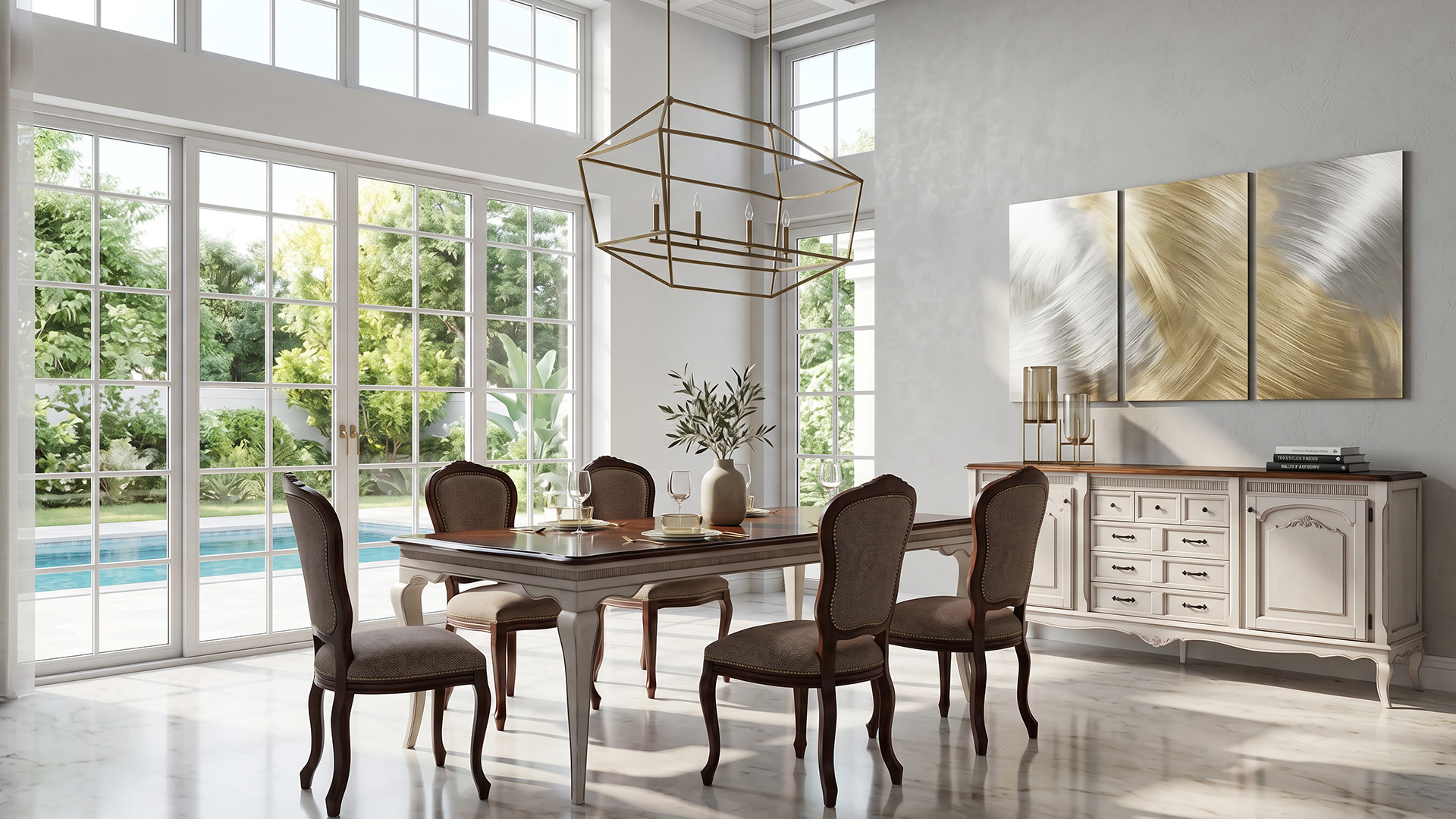
- Patina, antiquing and shading: Patina is a finish that gives wood an aged look through layers of paint and varnish; shading adds shadow and depth to the color. Our guide to patina paint explains how these techniques differ. The top of the Venedik Dining Table is painted a dark walnut tone using the patina technique and accented with shading, while its legs have a cream antiqued patina.
- Worm tracks and distress marks: Worm tracks are fine grooves that imitate the channels bored by woodworm; distress marks are small dings and worn spots deliberately added to the edges. Both give a piece the look of long years of use. On the Arizona Console, these details bring out the natural texture of the wood.
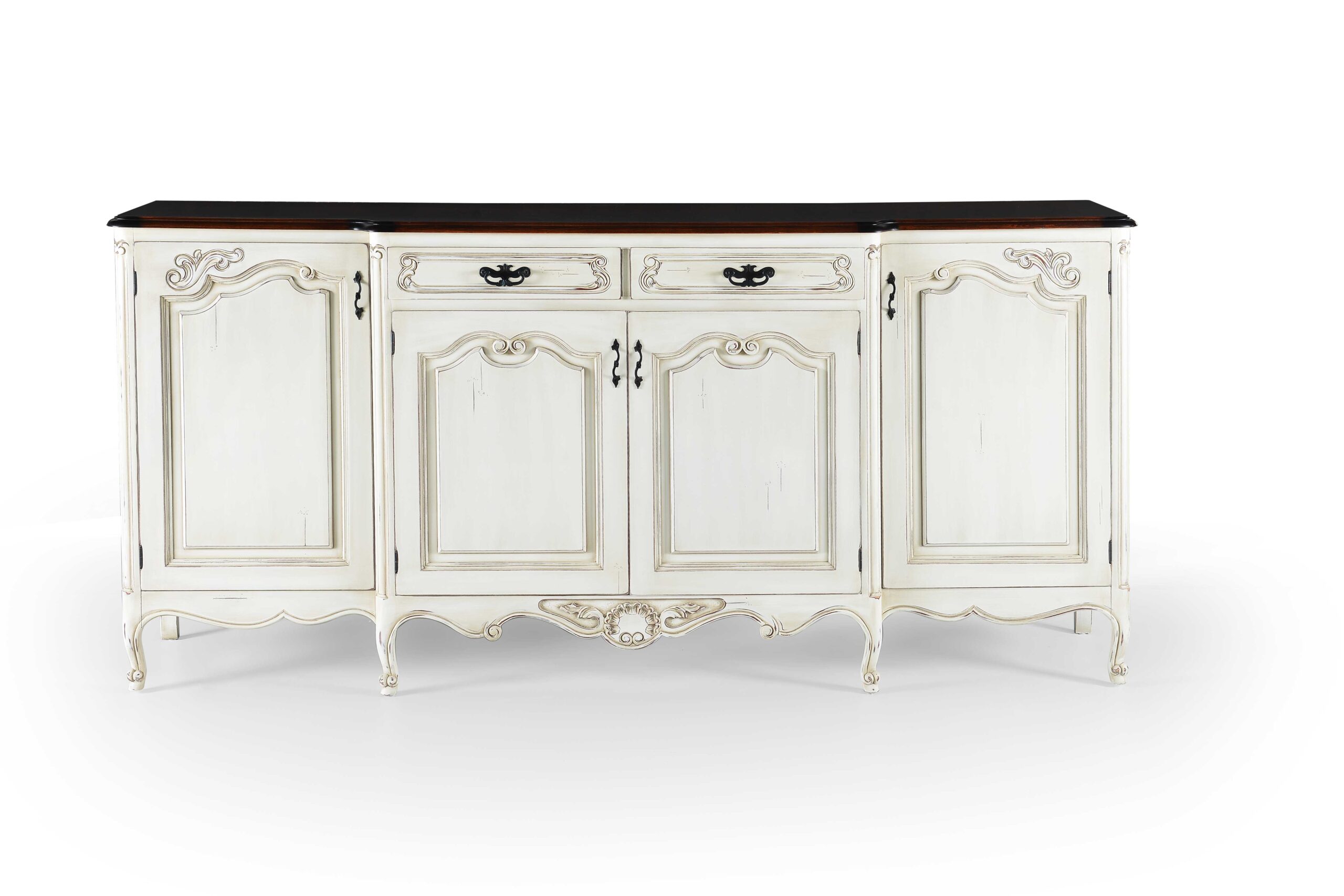
- Hand carving, turning and cabriole legs: Turning is shaping wood on a lathe into rounded profiles; a cabriole leg curves outward at the knee and inward at the ankle in an S shape. This kind of craftsmanship is common ground between country and classic. The Arizona Console has hand carving on its apron, doors and drawers and stands on cabriole legs, while the Versa Vanity Table has turned legs.
- Tufting and nailheads: Tufting is the raised pattern created by drawing the upholstery in with buttons at set intervals; nailheads are decorative studs hammered into the upholstery. On the Chesterfield sofa in the Elvin Sofa Set, the tufting buttons are pulled in by hand with twine. On the chairs of the Venedik Dining Room Set, antique nailheads are applied to the seats and backs.
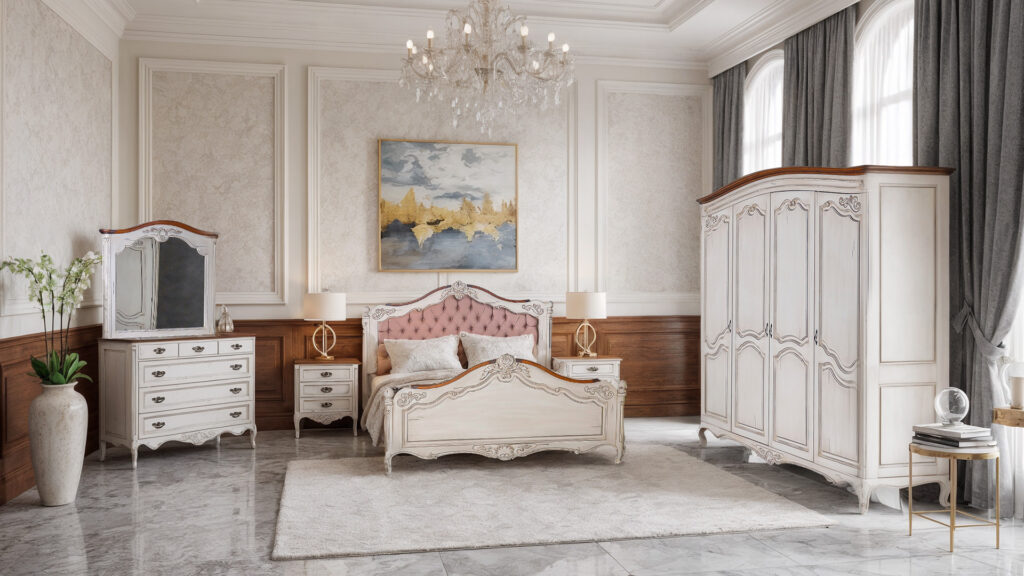
- Antique and forged pulls: Metal hardware looks aged rather than shiny. Every pull on the Elvin Wardrobe is an antique-look forged iron pull, and the nightstand, chest of drawers and vanity table in the Elvin Bedroom Set also have antique pulls.
- Naturally textured fabrics: Fabrics with a texture you can feel, such as linen, cotton and velvet, are preferred, and gingham and plaid patterns are among the signatures of the style. The bergère armchairs in the Elvin Sofa Set are covered in terracotta and beige gingham.
How English, French and American country differ
All three interpretations grow from the same rural roots; what sets them apart is color, leg shape, fabric and how much ornament they use. In short, English country is layered and patterned, French country is light and curvy, and American country is the simplest and most practical of the three.
| Style | Key features | Typical pieces and fabrics | Example at İmhotep |
|---|---|---|---|
| English country | Rooted in the cottage and country-house tradition; polished, painted or antiqued wood, carved details, a layered, relaxed arrangement | Wingback armchair, open-shelf hutch, Chesterfield; floral, plaid and checked fabrics | Arizona Console, Arizona Dining Table, Venedik Dining Table |
| French country | From the French provinces, especially the rural south; antiqued paint in cream, off-white, light gray and blue, curved legs, soft carving | Large wardrobe, buffet, rush-seat chair; linen and fabrics patterned with rural scenes | No product is described this way |
| American country | Farmhouse roots; clean lines, natural or painted wood, function first | Long farmhouse table, rocking chair, shelved cupboard; checked fabric, handmade patchwork quilts | No product is described this way |
The Arizona Console and the Arizona Dining Table take their inspiration from English country style, and so does the Venedik Dining Table; all three feature hand-carved details, patina and shading. Still, these categories are a matter of tendency, not hard lines: the cream antiqued patina and cabriole legs on the Arizona Console are also common in French country.
Country vs. classic vs. rustic furniture
Country-style furniture brings out the warmth of a rural home, classic furniture the symmetry and rich ornament of the palace and mansion tradition, and rustic furniture the rawest, least-worked form of wood. All three love wood, but they treat the surface differently: a classic piece usually aims to look flawless and polished, a rustic piece has rough surfaces and chunky lines, and a country piece looks carefully crafted but time-worn.
The boundary isn’t always sharp. Because hand carving, cabriole legs and nailheads are used in both styles, many pieces sit somewhere between country and classic. The Elvin Sofa Set is a good example of this middle ground: it combines the natural, warm character of country style with classic details. Our article on what classic furniture is explains the difference between classic, neoclassical and modern classic in detail.
Country-style furniture by room: living room, dining room, bedroom
In every room, one anchor piece usually sets the country mood, and the other pieces follow its lead with the same wood tone, patina and fabric. Examples from İmhotep’s sets designed along country lines:
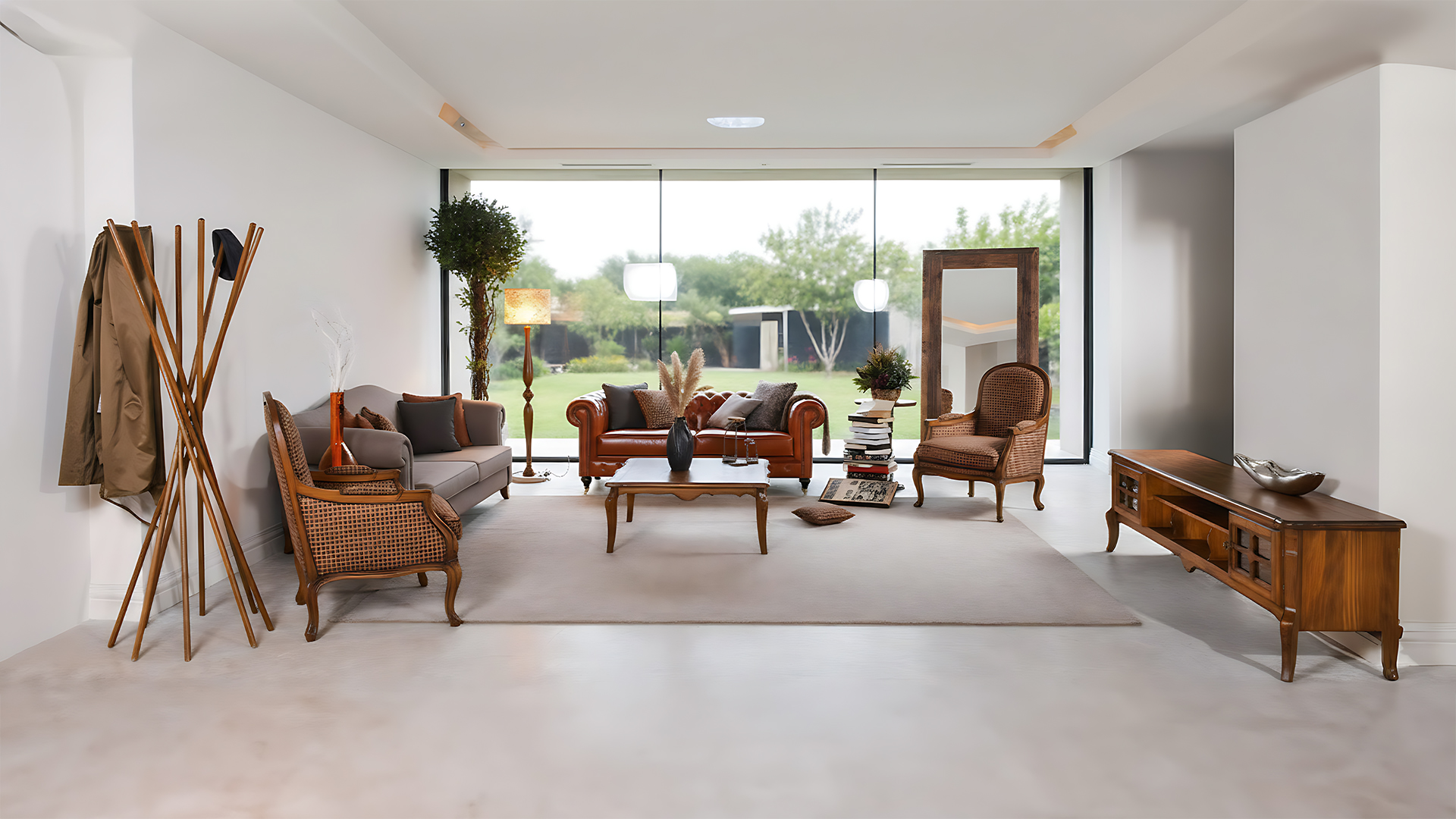
- Living room: In the living room, upholstery usually carries the country look; a leather Chesterfield or a gingham armchair sets the style even next to a plain sofa. The sofa set in the Elvin series consists of a Chesterfield sofa, a 2-seater sofa and two armchairs, pairing tan leather, mink-toned linen-textured fabric and gingham side by side. The Venedik Sofa Set brings the character of country style together with modern, refined details; its Chesterfield sofa is upholstered in genuine leather.
- Dining room: In the dining room, the table is the anchor piece; a dark-toned top paired with legs or a console in a light patina is a common combination in this style. The Venedik Dining Room Set, an elegant take on English country style, consists of a dining table for eight, a console, five chairs and a bench, and each chair back is topped with hand carving. The Versa Dining Room includes a console, an extendable dining table and six chairs; the table has turned legs.
- Bedroom: In the bedroom, the headboard and the wardrobe usually set the character. The Elvin Bedroom Set stands out for its cabriole legs, antique pulls and a headboard tufted in olive-green velvet. The Versa Bedroom has turned details on the legs and the headboard, which is tufted and upholstered in beige linen-textured fabric, plus a bench and pouf in a cream patina.
Country style in a modern home: start with one piece
You don’t need to replace all your furniture to give a modern home a country feel; often a single strong piece is enough. Against plain walls and a pared-back layout, a patinated wardrobe, a carved console or a sofa with nailhead trim changes the character of the room.
At İmhotep, which specializes in solid wood furniture, two examples that suit this approach are the Prada Wardrobe and the Venedik 4 Seater Sofa. The Prada Wardrobe brings the warm, characterful presence of country style into the bedroom with a modern twist: it is solid spruce throughout, with turned legs and a surface painted a walnut tone using the patina technique and wire-brushed. The Venedik 4 Seater Sofa likewise pairs the warmth of country style with modern details; its beige linen-textured upholstery gives it a natural look, while small antique nailheads on the arms and larger ones along the skirt emphasize its classic character.
- Limit your tones: Two main tones at most in one room, for example a walnut-tone top with a cream-patina body, usually look more balanced than three or four different wood tones.
- Choose natural textures in fabric: A solid-color linen or a small-check upholstery carries the country feel next to modern lines without overdoing it.
- Keep ornament in proportion: A side table next to a carved console can stay plain.
- Match the metalwork: Antiqued brass or iron lighting goes well with antique pulls and nailheads.
Where should you start with country style?
First decide which interpretation you like: layered and patterned English, light and curvy French, or simple and practical American. Then choose a single anchor piece and build the wood tone, patina and fabrics around it. If you want country and classic together, the sofa and dining room sets in the Venedik series are a good place to start; in both, country style meets classic details. You can compare the other series on our collections page. If you’d like to see the finishes and fabrics in person, our showroom in Siteler (Karacakaya Cad. No:141/A, Ankara) is open weekdays from 8:00 a.m. to 7:00 p.m. and Saturdays from 9:00 a.m. to 6:00 p.m.
Frequently asked questions
What is country style?
A decorating and furniture style born of rural home life. Natural wood, hand craftsmanship, time-worn surfaces and warm, soft colors are its foundation. It’s tied not to a particular period but to the feeling of a comfortable, lived-in home; English, French and American country are the three best-known branches of those shared roots.
What does country-style furniture mean?
Furniture that comes from the rural home tradition, shows off the texture of the wood and puts hand craftsmanship first. If you see visible wood grain, patina or antiqued paint, hand carving or turned legs, antique pulls and naturally textured fabric together, you’re most likely looking at a country piece. One detail isn’t enough; the style emerges when these elements come together.
What is a country-style home?
A home furnished with the warmth of a rural house, from its furniture to its textiles. Wood furniture, light and earth-toned walls, linen curtains, checked or knitted textiles and handmade objects are the shared language of these homes. You don’t need to use them all at once; in most homes, a few anchor pieces and coordinating fabrics are enough.
What is English country style?
The take on country that comes from English cottages and country houses, with a love of carved details, polished or painted wood and layered fabrics. Wingback armchairs, open-shelf hutches and floral, plaid and checked fabrics are typical. At İmhotep, the Arizona Console, Arizona Dining Table and Venedik Dining Table are designs inspired by this style.
What does French country furniture look like?
Light, antiqued paint in shades such as cream, off-white, light gray and blue, curved legs and soft carving are the hallmarks of French country. Coming from the French provinces, this interpretation favors large wardrobes, buffets, rush-seat chairs and linen fabrics. To bring the look into your home, a light-colored patina, linen upholstery and curved legs are usually all it takes.
What is the difference between country and classic furniture?
The difference lies both in their roots and on the surface. Classic furniture comes from the palace and mansion tradition; it is usually symmetrical, more heavily ornamented and smoothly polished or painted. Country comes from the rural home; it shows the texture of the wood and favors antiqued surfaces and simple proportions. Because hand carving and cabriole legs appear in both styles, many pieces sit somewhere in between.