What Is Traditional (Classic) Furniture? Styles and Details
We compare classic, neoclassical, modern classic, country and rustic styles in one table, explain hand carving, CNC, turning and nailheads, and show examples of the lükens leg.
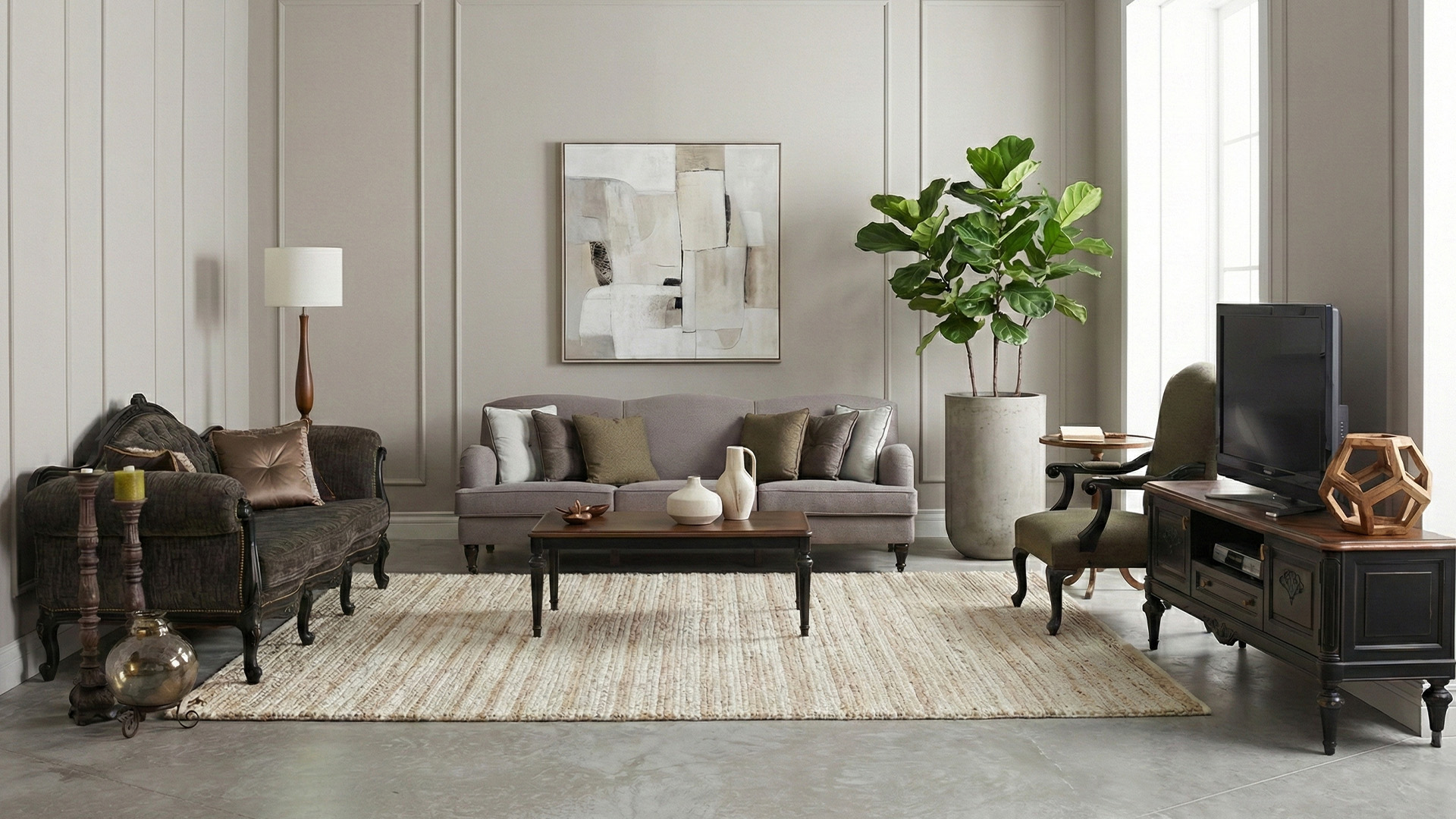
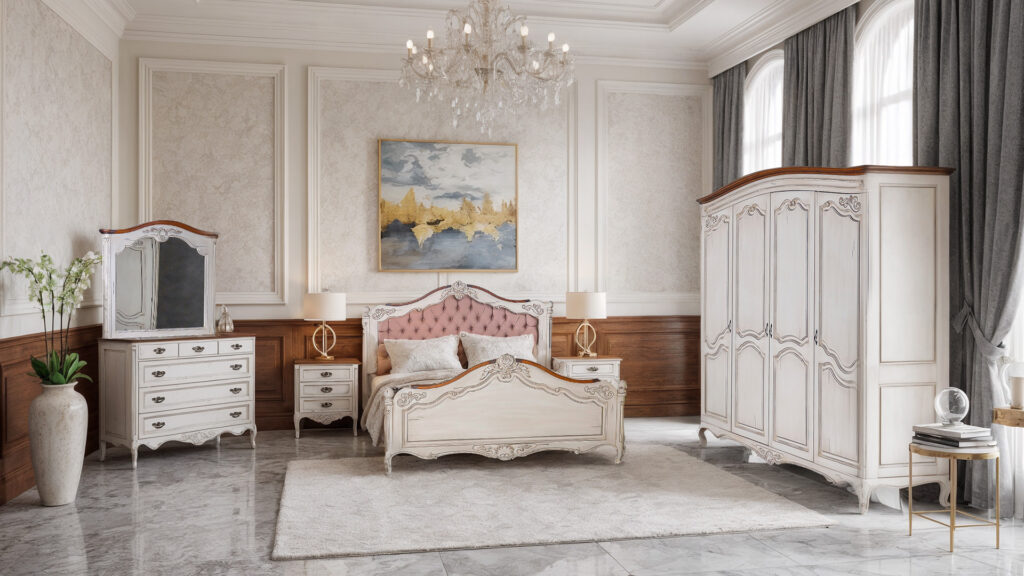
Classic furniture, often called traditional furniture in the US, carries on the forms of European palace and mansion furniture and is known for symmetry, curving lines and extensive handwork. Details make a piece classic: carved aprons, turned or cabriole legs, tufted upholstery, rows of nailheads and deeply patinated surfaces. Neoclassical, demi-classic and country, terms you’ll meet when researching classic furniture, are simpler or more rural takes on the same language.
Below, you can compare these styles alongside rustic, avant-garde and vintage in a single table, and in the glossary you’ll find definitions of hand carving, CNC carving, turning and nailheads, plus İmhotep examples of the lükens leg.
What is classic furniture, and what makes a piece classic?
Classic furniture isn’t a particular model but a design language distilled from historical forms, and that language is built on symmetry, curves and ornament. When a piece combines several of these elements, it can be described as classic:
- Symmetry: Split the piece down the middle and the two halves mirror each other. A console’s doors, a sofa’s arms and a bed’s headboard are all laid out around a central axis.
- Curving, lively lines: Aprons undulate, legs curve or are lathe-turned into rings and bulbs, and crest rails trace an arch.
- Ornament: Carving, turned work, inlay (setting wood of a different color or mother-of-pearl into the surface), nailheads and metal pulls enrich the surface. In classic furniture, ornament is part of the structure; it doesn’t look like an afterthought.
- Layered surfaces: Varnish, gilding (covering the surface with thin metal leaf) or paint techniques such as patina and distressing give the wood depth. You’ll find these paint techniques covered in detail in our guide to patina paint.
- Well-padded upholstery: Tufting, piping and nailheads are common on sofas, bergère armchairs and chairs.
At İmhotep, one example of this language is the Lükens series. In the Lükens Dining Room set, the lükens leg form and hand-carved details lend the pieces a classic character. The Lükens Sofa Set’s wooden sofa, meanwhile, brings together hand carving, a tufted back and antique nailheads in a single piece.
Classic, neoclassical, modern classic: a table of styles
The clearest difference between classic, neoclassical and modern classic furniture is the amount of ornament: classic is the richest, neoclassical is straighter and more restrained, and modern classic keeps the classic silhouette while toning down the ornament. Country, rustic, avant-garde and vintage sit outside this spectrum and are defined by their own criteria.
| Style | Form | Ornament | Materials and finish | Example tied to this style in İmhotep’s descriptions |
|---|---|---|---|---|
| Classic | Symmetrical, curving, full | Carving, turning, inlay, nailheads, tufting | Wood; varnished, gilded or patinated finish, metal pulls | Lükens Dining Room (“classic details,” lükens leg, hand carving) |
| Neoclassical | Straight-lined, symmetrical, inspired by ancient architecture | Fluted legs, frame and column motifs, restrained carving | Wood; varnished or painted, plain finish | None |
| Modern classic (demi-classic) | Classic silhouette, plain surfaces | Little carving, a single accent | Metal, glass and lacquer alongside wood | None; the closest wording is in the Elegance Armchair description: “brings classic form together with a modern interpretation” |
| Country | Sturdy, practical, rural | Simple carving, turning, aged metal | Visible grain, distressing; linen, gingham and floral fabrics | Venedik and Elvin sofa sets |
| Rustic | Large, heavy, thick-sectioned | Almost none | Minimally worked wood, knots, iron hardware | Louis Console (“both classic and rustic”) |
| Avant-garde | Bold, showy | Glossy surfaces, gilding, mirrors | Lacquer, metal, glass | None |
| Vintage | The form of the period it was made in | Varies by period | A piece made in the past and previously used | None |
The term neoclassical is used in two senses. In its original sense, it describes the return to ancient Greek and Roman forms in the second half of the 18th century, as a reaction against the heavy ornament of the Rococo; straight lines, fluted legs that taper toward the floor and symmetrical frames are the hallmarks of the style. In today’s market, the word is also used for simpler takes on classic forms.
Demi-classic (dömi klasik in Turkish) comes from the French word demi, meaning “half,” and means semi-classic: the classic silhouette is kept while carving and ornament are reduced. In the Turkish market, it’s often used interchangeably with modern classic. Vintage, in its original sense, isn’t a style but a description of age: it refers to used pieces made in past decades. New products with an old look are also called “vintage style.” İmhotep’s pieces are newly made; patina and distressing simply give them an aged look.
A glossary of classic furniture details
Of the five basic terms you’ll see in product details for classic furniture, three describe a production method (hand carving, CNC carving, turning) and two describe a detail (nailheads and the lükens leg).
Hand carving
Hand carving is the process of working a motif into wood by hand with chisels, carving knives and a mallet. The craftsman transfers the drawing onto the wood, carves away the background so the motif stands out in relief, and refines the edges by hand. Even when the same pattern is repeated on two pieces, small differences remain; those differences are the mark of handwork. On carved classic furniture, this work shows up most often on aprons, doors, crest rails and legs.
CNC carving
CNC carving is the process of cutting a computer-drawn motif into wood or a wood-based panel with a computer-controlled router. Because the pattern is produced from a file, it comes out exactly the same on every piece. It’s often used for geometric and repeating patterns and on lattice-style doors.
Turning
Turning is the process of shaping wood with a cutting tool while it spins on its own axis. This method produces round legs, posts and balusters animated by rings and bulbs. A “turned leg” is the name for a leg made this way.
Nailheads
A nailhead is a nail with a large, decorative head. On upholstered furniture, nailheads are hammered in a row along the edge of the fabric or leather, setting off the edge like a frame. “Antique nailheads” is the name usually given to nailheads with an aged-metal look.
The lükens leg
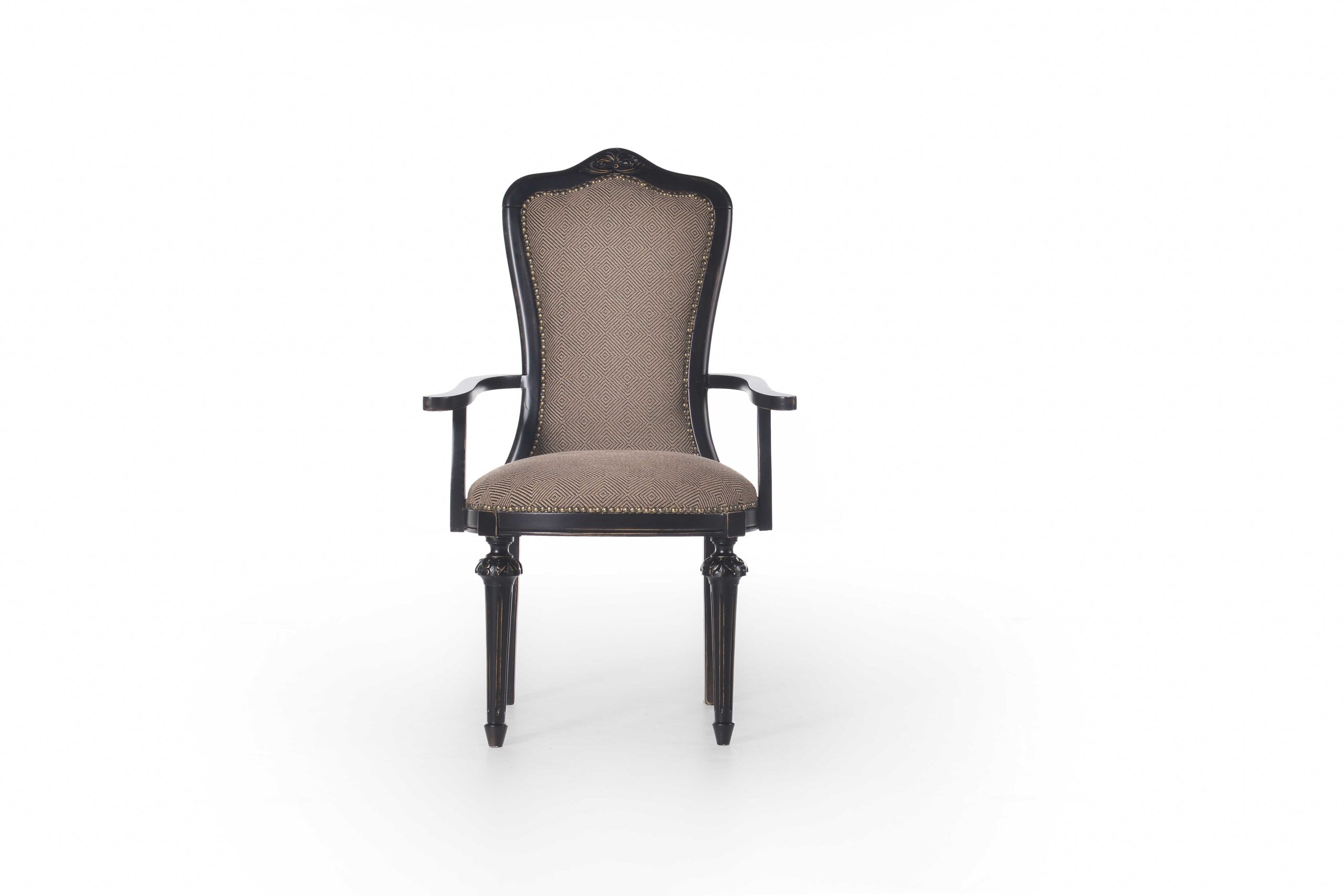
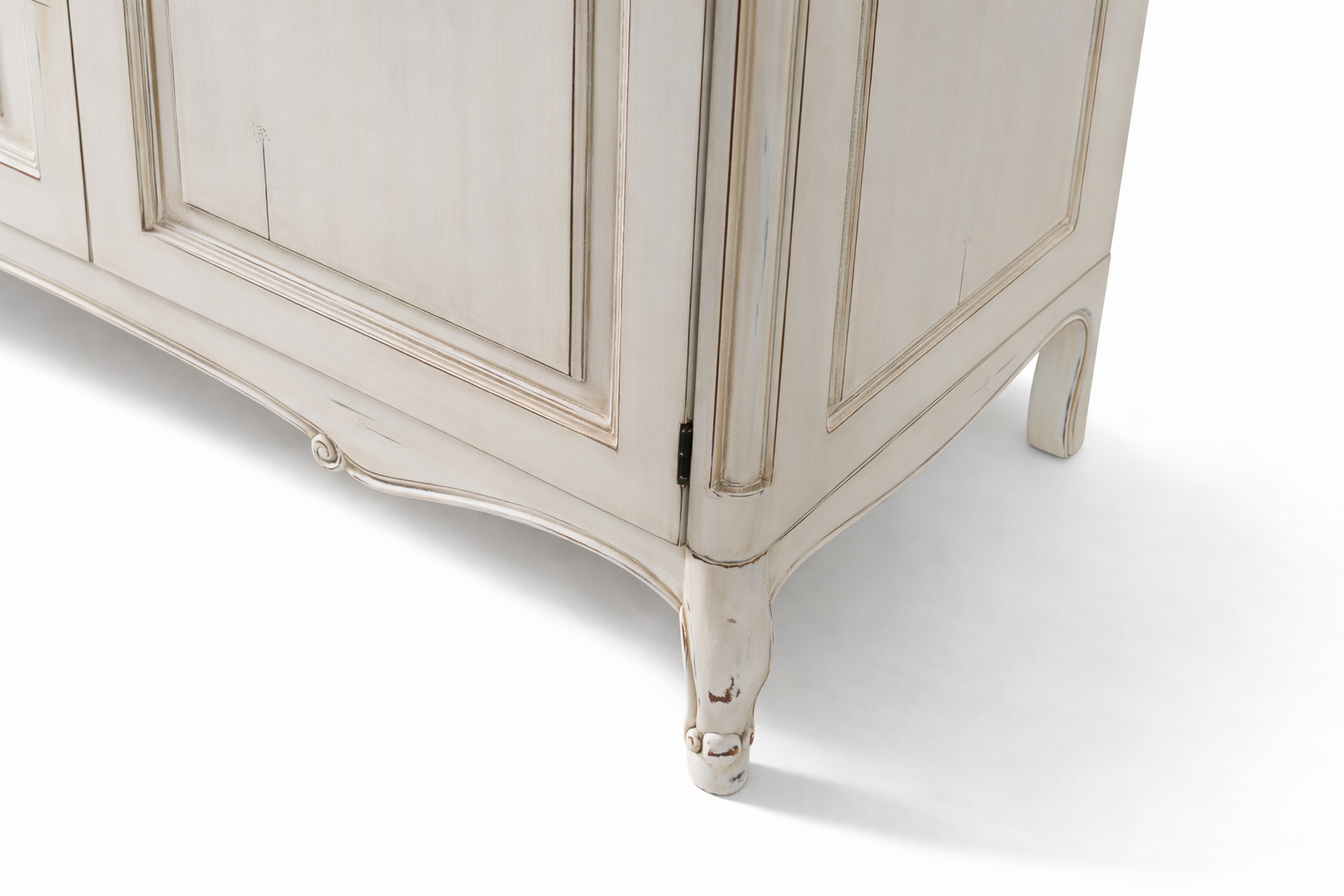
The lükens leg is a leg form whose name comes up often in İmhotep’s product descriptions. In product photos, it appears as a curved leg that bows outward at the knee and turns inward at the ankle: on the Lükens Entryway Console it is long and slender, while on the Arizona Wardrobe it is short and ends in a scroll. The descriptions say this form gives a piece an elegant, classic stance. The name isn’t limited to the Lükens series; this leg form is also mentioned for many pieces in the Elvin and Arizona series, as well as for other products such as the Venedik Pouf.
A sixth term can be added to these five: tufting. Tufting is a way of working upholstery fabric or leather so that buttons draw it in at set intervals, forming puffy squares or diamonds. You’ll find its best-known example in our article on the Chesterfield sofa.
Where does İmhotep use hand carving and CNC?
In İmhotep’s product descriptions, hand carving is mentioned for parts such as the doors, aprons and backs of wardrobes, consoles, sofas and chairs, while CNC is mentioned only for Şato and Bodrum products. What sets hand-carved furniture apart from CNC-carved furniture is how the motif is made: in hand carving it comes from the craftsman’s hand, in CNC from a drawing file. The table below lists only pieces whose product information names the method explicitly.
| Product | Method | Where |
|---|---|---|
| Arizona Wardrobe | Hand carving | Doors and apron |
| Venedik Triple Wardrobe | Hand carving | Door and apron sections |
| Lükens Console | Hand carving | Apron ends |
| Elegance Chair (With Armrests) | Hand carving | Chair back |
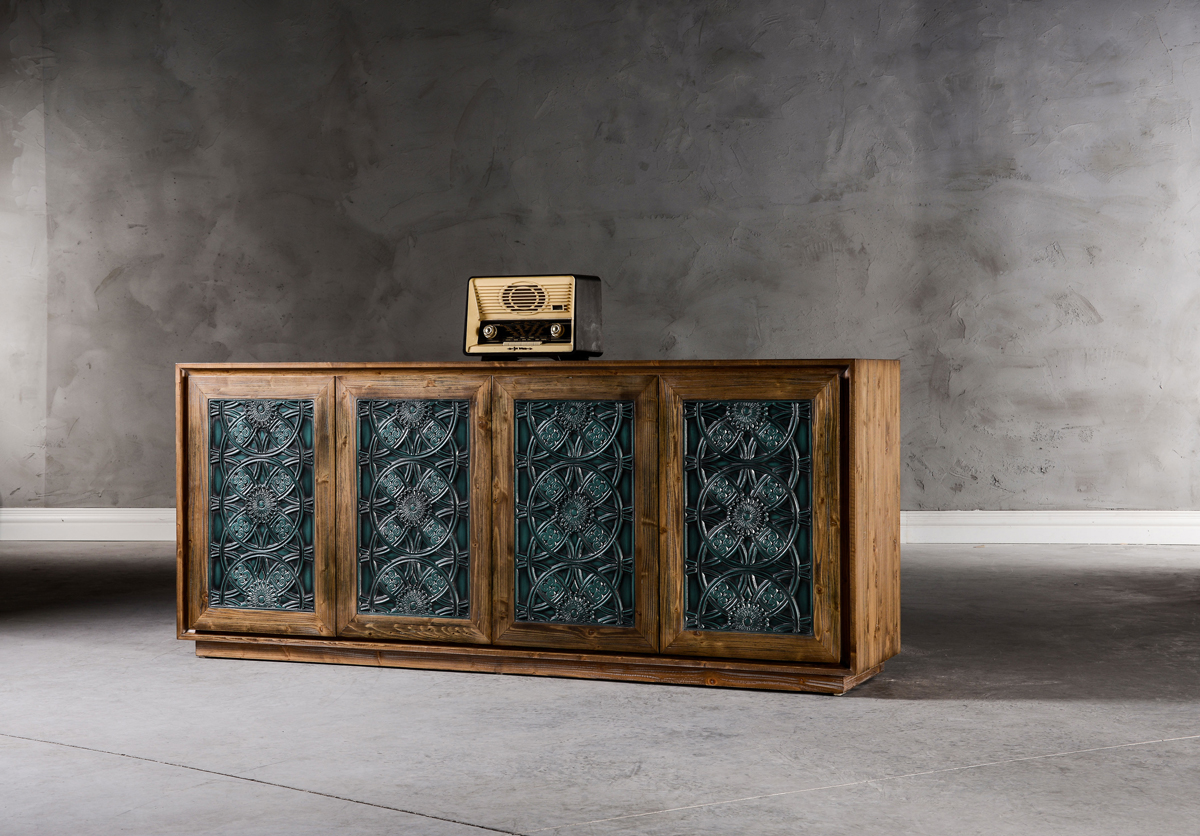
| Şato Console | CNC | Four cabinet doors; CNC details highlighted with shading |
| Bodrum Console | CNC cutting | Door surfaces, finished with lacquer paint |
CNC isn’t always used for a classic look. On the Bodrum Console, the CNC-cut details on the doors are finished with lacquer paint and add a modern refinement to the design. On the Şato Console, by contrast, the CNC-worked doors are painted a blue tone using the patina technique, and the other surfaces a walnut color.
Classic or country? Where does rustic fit in?
Classic furniture highlights the symmetry and rich ornament of the palace and mansion tradition; country highlights the warm, practical character of the rural home; and rustic shows wood in its least-worked, rawest state. Wood takes center stage in all three; the difference lies in how each treats the surface:
- Classic: The surface is carefully finished and layered; ornament is abundant and the proportions are grand.
- Country: Finished, but with a time-worn look; wood grain and distress marks aren’t hidden, and fabrics lean toward linen, gingham and florals.
- Rustic: Rustic furniture is thick-sectioned, rough-surfaced furniture that doesn’t hide the wood’s natural marks such as knots, cracks and irregular edges; the metal hardware is usually iron.
There’s no hard line between classic and country; hand carving, the lükens leg and nailheads are used in both styles. The Elvin Sofa Set combines the natural, warm character of country style with classic details. The Venedik Dining Room Set is likewise described as an elegant interpretation of English country style, shaped by classic lines. On the rustic side, the Louis Console is described as a piece that suits both classic and rustic approaches to decorating. You’ll find the English, French and American takes on country style covered in detail in our article on country-style furniture.
Mixing modern and classic furniture: how to make them work together
Modern and classic furniture sit comfortably side by side in the same room when a shared color, material or line ties them together; this mix is called eclectic style. Eclectic is an approach that deliberately brings together pieces from different periods and styles.
Two İmhotep products whose descriptions use the word “eclectic”:
- Elegance: The bergère armchair of the Elegance series brings classic form together with a modern interpretation and takes an eclectic approach that combines different design elements. On the legs, black silk-matte paint is applied over a yellow base coat that shows through, and the surfaces have an antiqued patina.
- Craft: The Craft Sofa Set pairs a wooden sofa, hand-carved on its crest, apron and legs and trimmed with antique nailheads, with a modern-lined four-seater sofa.
When you bring modern and classic pieces together in your own room, these four principles help:
- A single focal point: One carved piece, such as a wooden sofa or a console, reads better next to a simple couch and against plain walls.
- A color bridge: Repeat the wood tone of the classic piece in a modern one, for example in a tabletop or a frame.
- A material bridge: Antiqued brass, linen and velvet are shared textures that tie the two styles together.
- Balanced scale: Put low, clean-lined pieces next to a large, ornate one; two showy pieces side by side overpower each other.
In short: where should you start when choosing classic furniture?
First decide how much ornament you want; that’s what determines the style. Rich carving and tufting point to classic; restrained, straight lines to neoclassical; a single classic accent on a plain surface to modern classic; and a warm, time-worn look to country. Then look at the details: is the carving done by hand or by CNC, are the legs turned or cabriole, does the upholstery have tufting or nailheads? This information is often listed in the product details; if it isn’t, ask the seller.
Founded in 2002, İmhotep Mobilya is an Ankara-based company specializing in solid wood furniture. You can browse the series mentioned in this article in the İmhotep collections and take a close look at the carving and leg details in our showroom in Siteler, Ankara (Karacakaya Cad. No:141/A; weekdays 8 a.m.–7 p.m., Saturdays 9 a.m.–6 p.m.).
Frequently asked questions
What is neoclassical furniture?
It’s furniture inspired by ancient Greek and Roman architecture, with straight lines and restrained ornament. Typical signs include fluted legs that taper toward the floor, doors with rectangular or oval frames, and motifs such as columns, urns and garlands. Curves are few and the symmetry is strict. In the furniture market, the word also refers to a version of a classic piece with toned-down ornament.
What does demi-classic furniture mean?
It means semi-classic furniture; “dömi” is the Turkish phonetic spelling of the French word demi (half). The classic silhouette, such as a curved sofa arm or a turned leg, is kept, while carving and ornament are reduced. Surfaces are plainer, and metal, glass or lacquer may be used alongside wood. An uncarved console with flat doors standing on cabriole legs is a typical example of this look.
What is rustic furniture?
It’s furniture that highlights wood in its least-worked, most natural state. Thick sections, visible knots and cracks, rough or irregular edges and iron hardware are the signs of rustic style. It lacks the abundant ornament of classic furniture; what sets it apart from country is that the surface is left rawer.
What is avant-garde furniture?
In the Turkish furniture market, it’s the name usually given to a showy style marked by glossy lacquered surfaces, gilding, mirrors and bold forms; the word itself means “vanguard.” It combines classic curves with modern materials such as metal and glass in an exaggerated way. The word doesn’t appear in İmhotep’s product descriptions.
What is the difference between hand carving and CNC carving?
The difference lies in how the motif is produced. In hand carving, the craftsman works the motif into the wood with chisels and carving knives; because the depth and curves are shaped anew on each piece, no two pieces are ever exactly alike. In CNC carving, the motif is drawn on a computer and a CNC router repeats the same pattern identically on every piece. For organic motifs such as leaves, shells and scrolls, the hand-carving tradition lives on.
What are the common types of classic furniture legs?
The most common legs on classic pieces are turned legs, cabriole legs, straight fluted legs and claw feet. Turned legs are shaped with rings and bulbs; cabriole legs bow outward at the knee and turn inward at the ankle; straight fluted legs taper toward the floor and appear on neoclassical pieces; claw feet end in a carved animal claw. The lükens leg, often mentioned in İmhotep’s descriptions, also appears in product photos as this cabriole type.