Wardrobe Dimensions: Depth, Height and Width by Number of Doors
Wardrobe depth, height and width by number of doors, the points people miss when measuring, and a dimensions table for six İmhotep models.
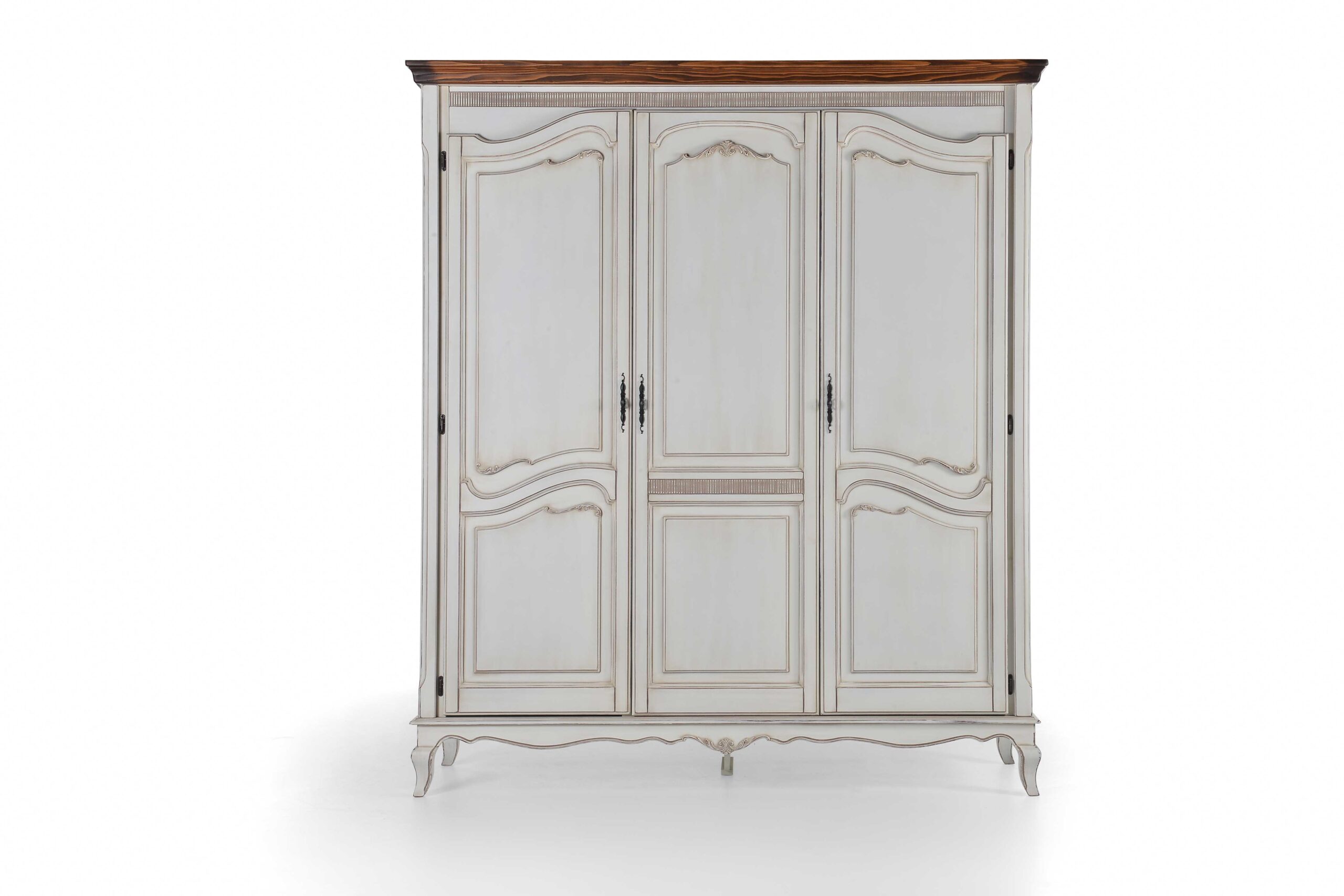
With most manufacturers, wardrobe dimensions run 50–65 cm deep and 180–240 cm tall; the width depends on the number of doors, usually figured at 40–60 cm per hinged door. For hanging clothes, a depth of at least 55 cm, doors included, is recommended. Across the six İmhotep wardrobes in this article’s table, depth ranges from 43 to 66 cm and height from 219 to 232 cm.
All dimensions are in centimeters and given as width × depth × height (W×D×H).
Wardrobe dimensions at a glance: depth, height and width
Most ready-made wardrobes are built 50–65 cm deep, doors included, and 180–240 cm tall; the width grows with the number of doors. There is no single rule for wardrobe dimensions that every manufacturer follows; the figures known as “standard wardrobe dimensions” are common ranges that manufacturers have settled on to leave room for hangers and doors:
- Depth: Usually 50–65 cm including the doors; the most common figures are around 55–60 cm. Models under 50 cm count as shallow wardrobes.
- Height: Mostly 180–240 cm for ready-made wardrobes. For custom floor-to-ceiling units, the height is set by subtracting an installation allowance from the ceiling height.
- Width: Roughly the number of doors × the door width; 40–60 cm per door is typical for hinged doors.
- Clear space in front: Generally 80–100 cm of clear space, measured from the front of the wardrobe, is recommended; the hinged doors open within this space.
Depth clusters around 60 cm because of the hanger. Most adult clothes hangers are 40–45 cm wide. When the hanging rod runs parallel to the back wall, the hangers span the depth of the cabinet; to that width you add allowances for the back panel, the door in front and the bulk of the clothes. Once these allowances are added, jacket shoulders in cabinets shallower than 55 cm sit close to the door and may rub against it.
Your ceiling sets the height: the model has to be lower than the lowest point of the ceiling, and if the cabinet will be carried in lying down and stood up in the room, you also need the diagonal clearance explained below. A crown is the molded or carved decorative top along a wardrobe’s upper edge; on crowned models, it’s worth leaving a little space above so the crown can be seen. Most people can’t comfortably reach the top compartment without a step stool, so set it aside for seasonal items and comforters.
Wardrobe width by number of doors
Of all the dimensions of a wardrobe with doors, width varies the most, and it depends largely on the number of doors: at 40–60 cm per hinged door, a two-door wardrobe comes to about 80–120 cm and a four-door wardrobe to 160–240 cm. The table below summarizes the ranges you’ll find at most manufacturers.
| Number of doors | Typical total width | Where it works |
|---|---|---|
| 1 door | 40–60 cm | Alcove, hallway, extra hanging space |
| 2 doors | 80–120 cm | Kids’ and teen rooms, single user |
| 3 doors | 120–180 cm | Small and medium-sized bedrooms |
| 4 doors | 160–240 cm | Two users, primary bedroom |
| 5–6 doors | 200–360 cm | A layout that covers a whole wall |
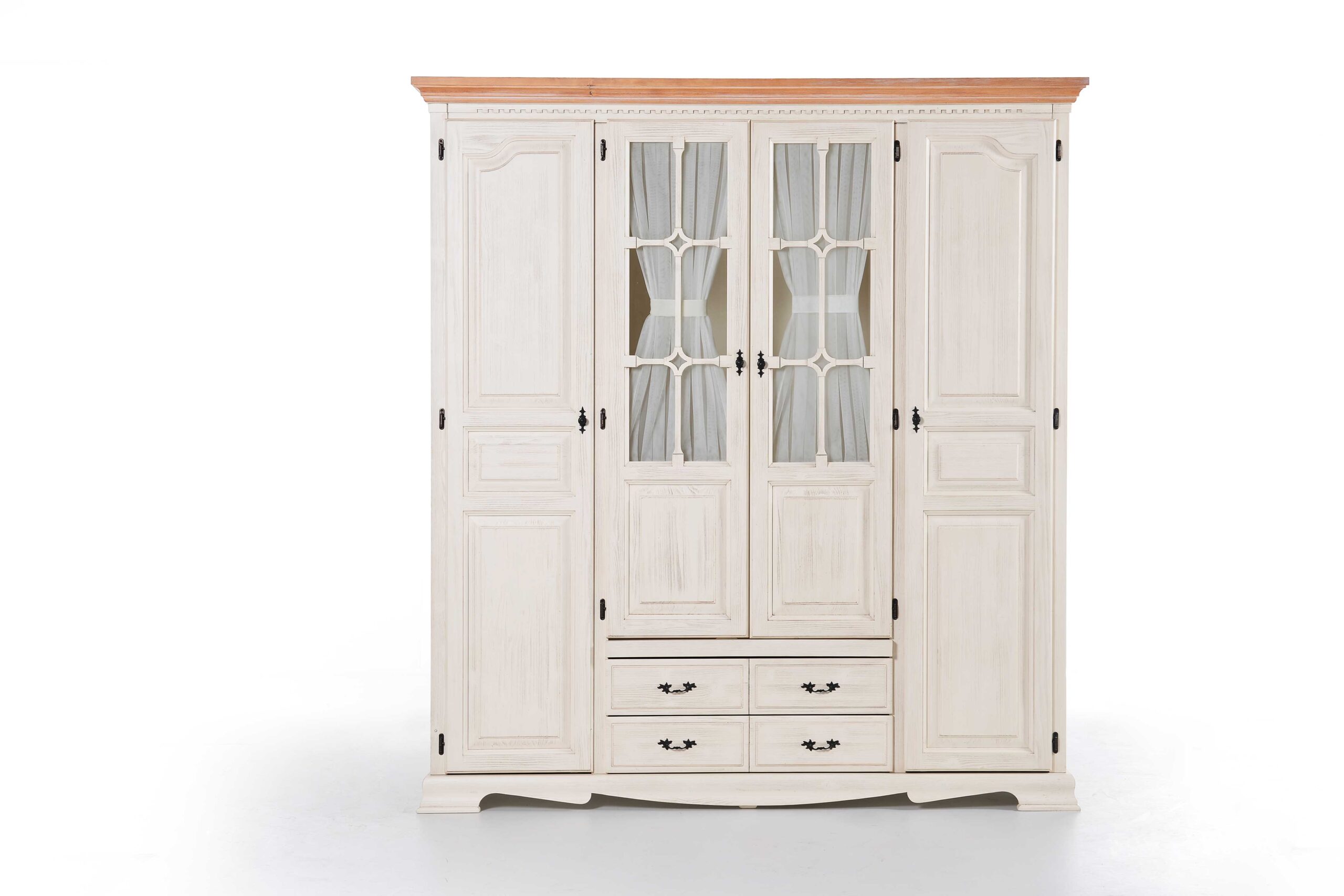
In classic and country wardrobes, the uprights (the vertical supports of the cabinet), the carved skirt and the door frames are often made wider, so with the same number of doors the total width can reach the top of the range or even go beyond it. Sliding-door models work differently: their doors are usually wider and glide past one another instead of swinging into the room, so the 40–60 cm figure for hinged doors doesn’t apply; the track also adds a few centimeters to the depth.
Dimensions of six İmhotep wardrobes
The table below lists the dimensions given on the product pages of six İmhotep wardrobes, along with the number of doors; the rows are sorted by width.
| Model | Doors | Width | Depth | Height |
|---|---|---|---|---|
| Venedik Double Wardrobe | 2 | 140 cm | 64 cm | 230 cm |
| Venedik Triple Wardrobe | 3 | 201 cm | 60 cm | 230 cm |
| Versa Four-Door Wardrobe | 4 | 203 cm | 60 cm | 219 cm |
| Lükens Wardrobe | 4 | 250 cm | 58 cm | 227 cm |
| Elvin Wardrobe | 4 | 255 cm | 43 cm | 230 cm |
| Arizona Wardrobe | 4 | 263 cm | 66 cm | 232 cm |
The table also shows that the number of doors doesn’t determine width on its own. The Versa Four-Door and the three-door Venedik Triple are almost the same width (203 and 201 cm). The four-door models, meanwhile, range from 203 to 263 cm wide, a difference of 60 cm. Divide the Venedik Double’s 140 cm width by its number of doors and you get roughly 70 cm per door, above the typical 40–60 cm range. So don’t start your search with the number of doors; compare the clear width of your wall directly with the model’s width.
How do you measure for a wardrobe?
When measuring for a wardrobe, take the width, height and depth at several points and go by the smallest figure for each; then check the door swing space and the route the wardrobe will take to reach the room. Walls and ceilings aren’t the same at every point, so a measurement taken in just one spot can be misleading.
- Wall width: Measure the wall at three heights: near the floor, at waist level and near the ceiling. Walls aren’t always flat and corners aren’t always perfectly square, so go by the shortest measurement and leave 1–2 cm of clearance in total.
- Ceiling height: Measure at both ends and in the middle of the area where the wardrobe will go. If there’s crown molding, a drop ceiling, spotlights or a curtain rod, measure to their underside.
- Baseboards and obstacles on the wall: A baseboard pushes the wardrobe away from the wall by its own thickness, and those few centimeters come out of the walkway in the room. If an outlet, light switch, radiator or air conditioner line will end up behind the wardrobe, note where they are.
- Door swing space: A hinged door swings out into the room by its own width. Generally 80–100 cm of clear space, measured from the front of the wardrobe, is recommended; the door opens within this space. Check for conflicts with the bed, a nightstand, the room door or a window sash, and on models with drawers at the bottom, also allow room for the drawer to open fully.
- Delivery route: The building entrance, the inside dimensions of the elevator car, the turns in the stairway and the clear opening of the room door all need to be wider than the wardrobe’s largest piece. Before you buy, ask how many pieces the wardrobe comes in and how big the largest one is.
- Clearance for standing it up: A cabinet carried in lying down and stood up in the room needs as much room as its diagonal while it’s being raised. The diagonal is the square root of the sum of the squares of the height and the depth: at 230 cm high and 60 cm deep, it comes to about 238 cm. If your ceiling is 240 cm, the margin is very small; if the cabinet is assembled in place, you may not need this calculation.
Wardrobe depth: what to watch for in shallow and deep models
The right wardrobe depth depends on how you’ll use it: for hanging clothes, 55–62 cm including the doors is comfortable and 50–55 cm is borderline; under 50 cm is better suited to shelves and folded clothes, while over 62 cm makes room for heavy winter coats but takes up more of the room. When choosing, think first about what you’ll hang, then about how much walkway will be left in front of the wardrobe.
Shallow wardrobes (under 50 cm)
Shallow wardrobes are chosen for narrow bedrooms and hallways to keep the walkway clear. At this depth, a 40–45 cm hanger may not fit on a standard hanging rod running parallel to the back wall. That’s why shallow cabinets usually have a shelf-based layout or a front-facing hanging layout, where the rod runs from front to back; with this layout, you see the clothes face-on when you look in through the door. The shallowest model, going by the dimension on its product page, is the Elvin Wardrobe at 43 cm deep; according to its product description, it has four doors and its interior has shelves and hanging space. If you’re considering a shallow model, see for yourself how the hangers sit in the cabinet before you buy.
Standard depth (50–62 cm)
The 55–62 cm part of this range is the most balanced for hanging clothes: jackets and shirts hang without rubbing against the door, and the wardrobe doesn’t take up too much of the room. Between 50 and 55 cm is borderline; thin garments hang easily, but jacket shoulders may come close to the door. The Lükens Wardrobe is 58 cm deep, and the Venedik Triple and Versa Four-Door are 60 cm deep.
Deep wardrobes (over 62 cm)
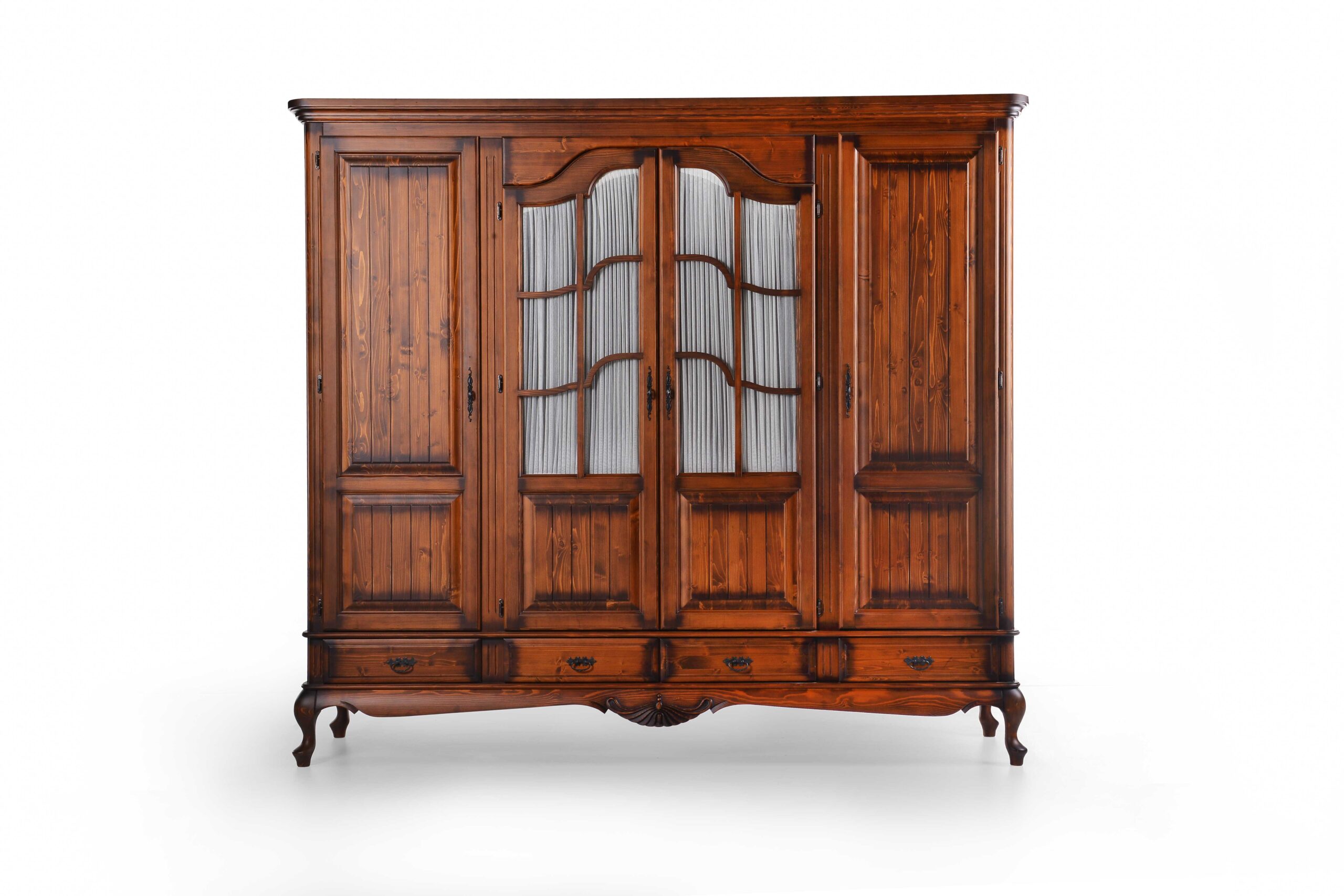
A deep cabinet makes plenty of room for bulky items such as heavy jackets, coats and comforters; on the other hand, reaching the back of a shelf gets harder and the walkway in front gets narrower. The deep group includes the Venedik Double (64 cm) and the Arizona Wardrobe (66 cm). If you’re choosing a deep model, measure the distance between the bed and the wardrobe again with the doors open.
Wardrobe interior layout: a quick summary
A good wardrobe layout keeps everyday clothes at eye and waist level, seasonal items at the top, and small, heavy pieces in drawers. A common starting point is to set aside a single tier of long hanging for long garments such as dresses and coats, two tiers of short hanging for shirts and jackets, and shelves for knitwear and T-shirts.
We covered the balance of hanging space, shelves and drawers from a planning perspective in our dressing room article; the same principles apply to a wardrobe. Among İmhotep wardrobes, the interior layout varies from model to model: according to the product descriptions, the Versa Four-Door, Lükens and Arizona have drawers in addition to shelves and hanging space, while the descriptions of the Venedik and Elvin models mention shelves and hanging space. If you’re thinking about extra storage with drawers next to the wardrobe, our article on the difference between a nightstand and a chest of drawers sums up which piece fits where.
Wardrobe or dressing room?
If you have space along a single wall and may move in the future, a wardrobe makes more sense; if you can set aside a separate room or a deep alcove and your storage needs won’t fit in a single cabinet, a dressing room, or walk-in closet, is the better choice. When deciding, look at these criteria:
- Space: A dressing room needs a walkway in front of the cabinets that you can move around in comfortably; a wardrobe uses one wall of the bedroom, and door swing space in front of it is enough.
- Portability: A freestanding wardrobe comes with you when you move; a dressing room is usually built to fit the space and stays there.
- A consistent look: A wardrobe that’s part of a bedroom set shares the same design language as the bed and nightstands. In İmhotep’s Venedik, Versa, Lükens, Elvin and Arizona bedroom sets, the wardrobe is part of the set; the Venedik set includes two wardrobes, with two and three doors, and the Versa set two wardrobes, with two and four doors.
- Capacity: When one wardrobe isn’t enough, using two cabinets side by side is an in-between solution worth trying before moving to a dressing room.
Wardrobe dimensions checklist
To choose the right wardrobe, first measure the shortest width of the wall and the lowest point of the ceiling, then the space left in front when the doors are open; set the depth according to the clothes you’ll hang. A practical checklist:
- Width: 1–2 cm less in total than the wall’s shortest measurement.
- Depth: 55–62 cm including the doors for hanging clothes; in a narrow room, a shallow model with a front-facing hanging layout.
- Height: lower than the lowest point of the ceiling; if the cabinet will be stood up after being carried in lying down, its diagonal (√(height² + depth²)) must also be shorter than the ceiling height.
- Front clearance: 80–100 cm of clear space measured from the front of the wardrobe; the doors open within this space.
- Route: the largest piece has to fit through the doors, the elevator and the stairway.
Once you have your measurements, you can compare models on the İmhotep wardrobe models page. If you like, bring your measurement notes to our showroom in Siteler, Ankara (Karacakaya Cad. No:141/A), and we can talk through your options together; the showroom is open weekdays from 8:00 a.m. to 7:00 p.m. and Saturdays from 9:00 a.m. to 6:00 p.m.
Frequently asked questions
How deep is a standard wardrobe?
Most ready-made wardrobes are 50–65 cm deep including the doors; the most common figures are around 55–60 cm. That depth comes from the allowance needed for a 40–45 cm adult hanger to hang on a rod running parallel to the back wall without rubbing against the door. Shallow wardrobes made for narrow rooms stay under 50 cm and are mostly used with shelves or a front-facing hanging layout.
How deep should a wardrobe be?
If you’ll hang clothes, aim for at least 55 cm including the doors; 55–62 cm is a comfortable range. If you also want to keep heavy jackets and coats in the same cabinet, more than 62 cm helps, but the wardrobe takes up more space in the room. If you’ll store only folded clothes and accessories, a depth under 50 cm is often enough.
How do you measure for a wardrobe?
Measure the wall’s width at three different heights and the ceiling at both ends and in the middle; in both cases, go by the shortest figure. Note how far the baseboard, outlets and pipes will push the wardrobe away from the wall. Then check the space left in front with the doors open, the route through the door and elevator, and whether the cabinet will hit the ceiling as it’s stood up.
How wide is a wardrobe?
A two-door wardrobe is usually 80–120 cm wide, a three-door 120–180 cm and a four-door 160–240 cm; the calculation is based on 40–60 cm per hinged door. In classic and country models, the doors and uprights may be made wider, so with the same number of doors the total width can exceed these ranges. That’s why you should compare your wall measurement directly with the model’s width.
How should a wardrobe be organized?
Everyday clothes belong at eye and waist level, seasonal items on the top shelf, and small, heavy pieces in drawers. A good starting point is to set aside long hanging for dresses and coats, two tiers of short hanging for shirts and jackets, and shelves for knitwear and T-shirts. The balance of hanging space, shelves and drawers is also covered in our dressing room article.
Is the Turkish word spelled “gardırop” or “gardrop”?
The correct spelling is “gardırop.” The word comes from the French garde-robe, and that’s the form listed in the Turkish Language Association’s dictionary. The spelling “gardrop” is common in listings and searches, but it isn’t the standard spelling. Both spellings refer to the same piece of furniture, the wardrobe, so the ranges in this article apply whichever spelling you search with.
Should a wardrobe go all the way to the ceiling?
It doesn’t have to. A custom floor-to-ceiling wardrobe eliminates the gap on top where dust collects and adds storage; however, it requires very precise measuring and an installation allowance. On ready-made and classic models, it’s normal to have some space left above; on crowned wardrobes (models topped with a decorative crown), this space lets the crown show. If the cabinet will be carried in lying down and stood up, factor in the diagonal clearance as well.